CATHETERS
PROGREAT® Microcatheter
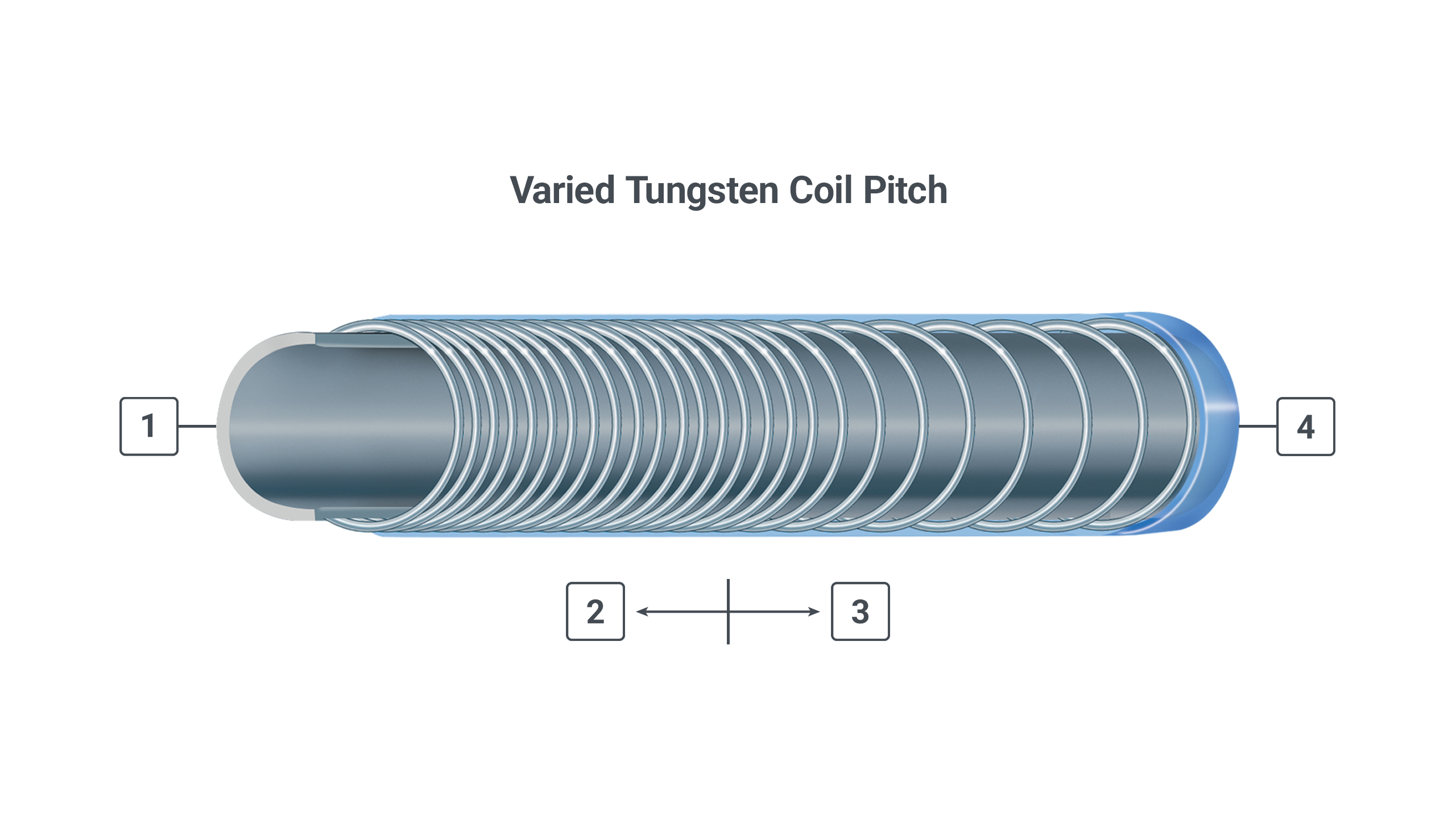
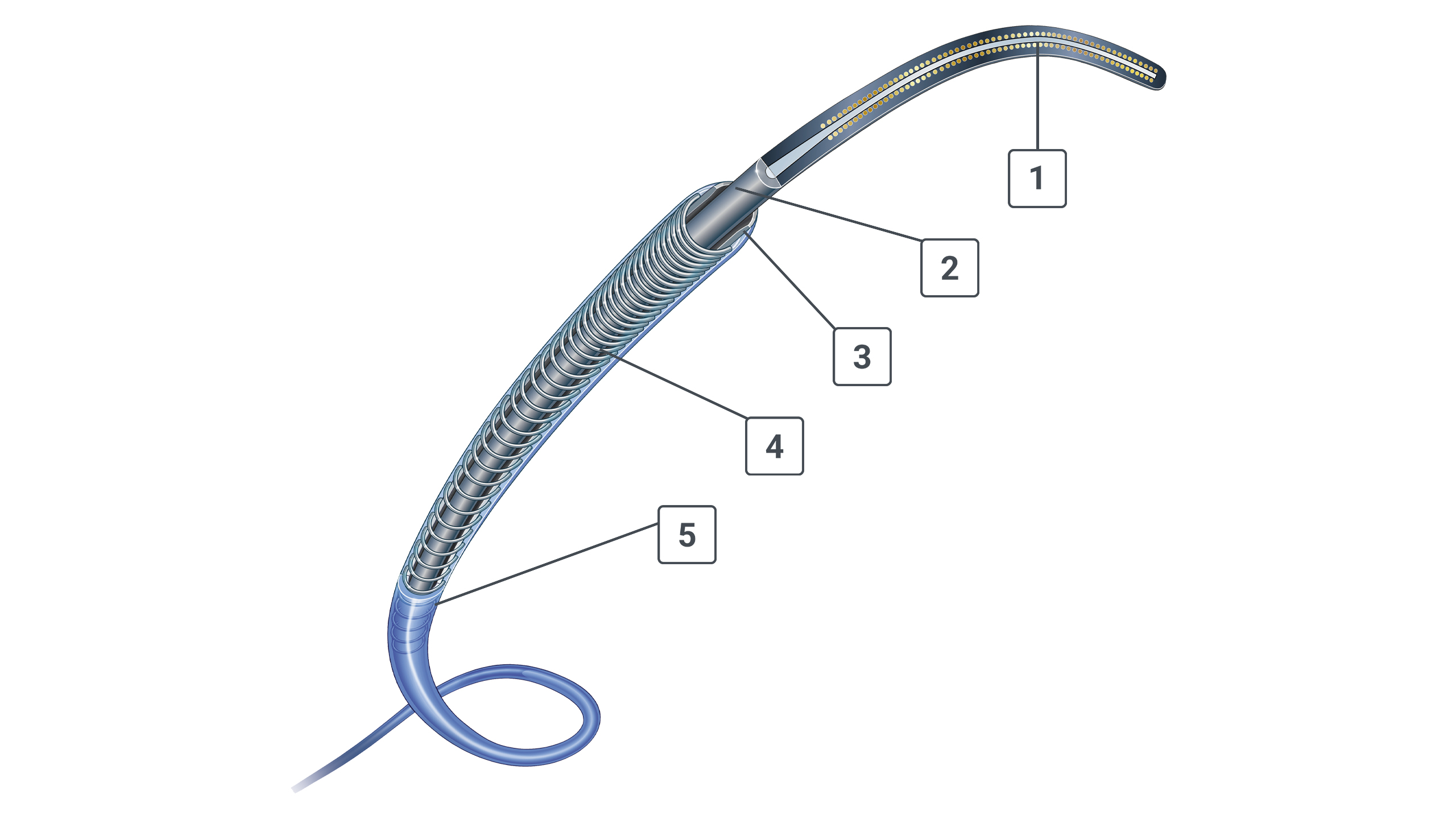
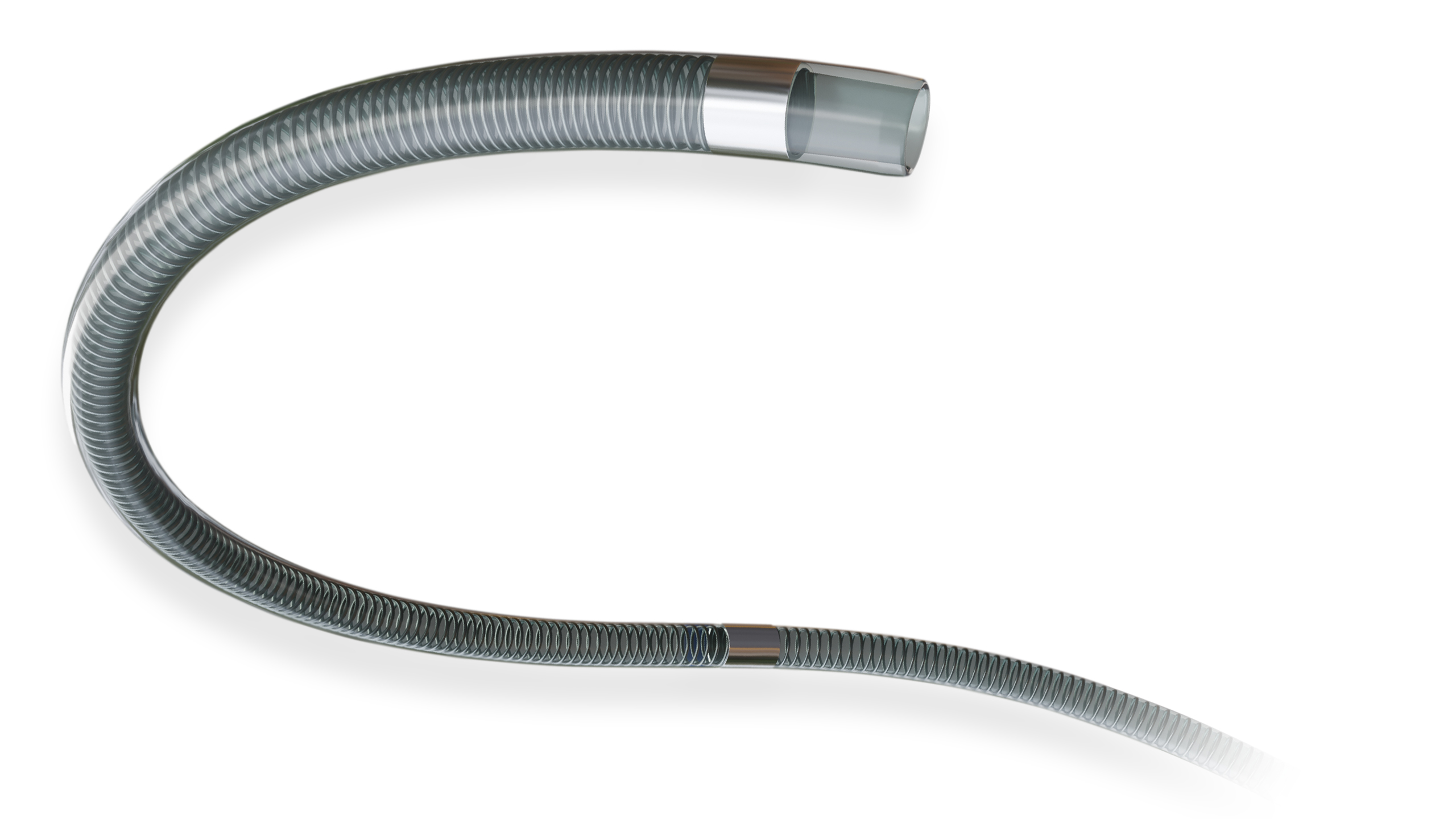
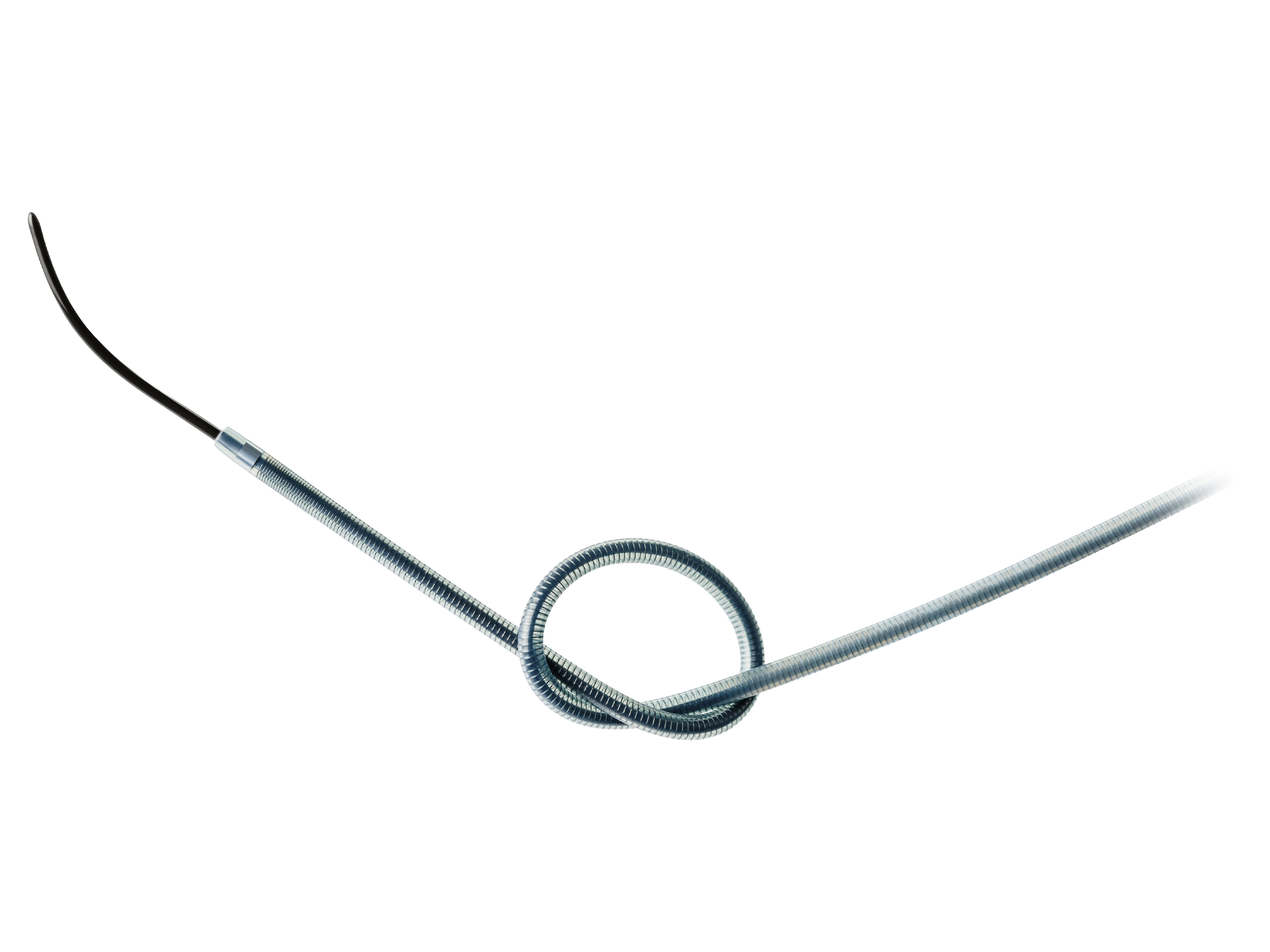
PROGREAT Microcatheters are designed to allow navigation through tortuous vasculature to access peripheral vessels, with optimal trackability and delivery of therapeutic agents for embolization.
CATHETERS
PROGREAT Microcatheters are designed to allow navigation through tortuous vasculature to access peripheral vessels, with optimal trackability and delivery of therapeutic agents for embolization.



| Catheter OD | Length (cm) |
Inner Diameter (in/mm) |
Max GW (in) |
Embolic Compatibility |
Dead Space Volume (mL) |
Actual Flow Rate* (mL/sec) @ 750 psi | Actual Flow Rate* (mL/sec) @ 900 psi |
| 2.4/2.9Fr (0.80/0.97mm) |
110 | 0.022"/0.57 | 0.018" | 0.018" Coils/HydroPearl® 600 ± 75 μm |
0.38 | 2.0 | - |
| 2.4/2.9Fr (0.80/0.97mm) |
130 | 0.022"/0.57 | 0.018" | 0.018" Coils/HydroPearl® 600 ± 75 μm |
0.43 | 1.7 | - |
| 2.4/2.9Fr (0.80/0.97mm) |
150 | 0.022"/0.57 | 0.018" | 0.018" Coils/HydroPearl® 600 ± 75 μm |
0.47 | 1.4 | - |
| 2.7/2.9Fr (0.90/0.97mm) |
110 | 0.025"/0.65 | 0.021" | 0.018" Coils/HydroPearl® 800 ± 75 μm |
0.46 | 3.0 | - |
| 2.7/2.9Fr (0.90/0.97mm) |
130 | 0.025"/0.65 | 0.021" | 0.018" Coils/HydroPearl® 800 ± 75 μm |
0.53 | 2.6 | - |
| 2.8/3.0Fr (0.93/1.00mm) |
110 | 0.027"/0.70 | 0.021" | 0.018" Coils/HydroPearl® 800 ± 75 μm |
0.53 | 3.5 | 3.9 |
| 2.8/3.0Fr (0.93/1.00mm) |
130 | 0.027"/0.70 | 0.021" | 0.018" Coils/HydroPearl® 800 ± 75 μm |
0.59 | 3.0 | 3.6 |
| 2.8/3.0Fr (0.93/1.00mm) |
150 | 0.027"/0.70 | 0.021" | 0.018" Coils/HydroPearl® 800 ± 75 μm |
0.66 | 2.7 | 3.2 |
Includes hemostatic valve and shaping mandrel
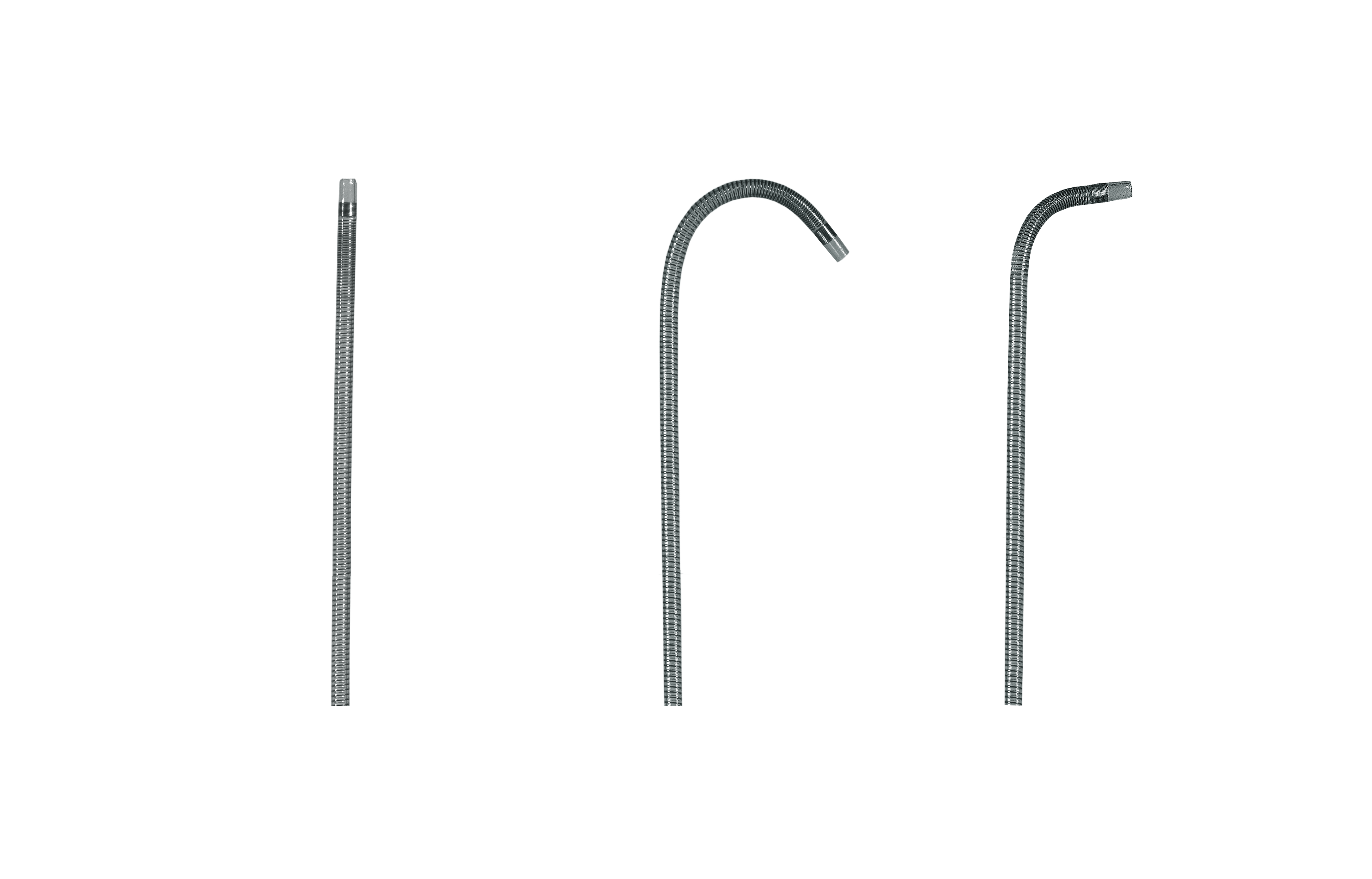
| Fr Size | Product Code | Length (cm) | Tip Shape | Max Pressure (psi) |
RO Markers | Hydrophilic Coating Length (cm) |
| 2.4 | MC*PB2411Y | 110 | Straight | 750 | 1 | 50 |
| MC*PB2413Y | 130 | Straight | 750 | 1 | 70 | |
| MC*PB2413ZRA | 130 | 70 Deg. Angle | 750 | 1 | 70 | |
| MC*PB2413ZRC | 130 | J Curve | 750 | 1 | 70 | |
| MC*PV2415Y | 150 | Straight | 750 | 2 | 90 | |
| MC*PV2415ZRA | 150 | 70 Deg. Angle | 750 | 2 | 90 | |
| MC*PV2415ZRC | 150 | J Curve | 750 | 2 | 90 | |
| 2.7 | MC*PC2711Y | 110 | Straight | 750 | - | 50 |
| MC*PC2713Y | 130 | Straight | 750 | - | 70 | |
| 2.8 | MC*PB2811Y | 110 | Straight | 900 | 1 | 50 |
| MC*PB2813Y | 130 | Straight | 900 | 1 | 70 | |
| MC*PV2815Y | 150 | Straight | 900 | 2 | 90 |
| Fr Size | Product Code |
Length (cm) |
Max Pressure (PSI) |
RO Markers | Hydrophilic Coating Length (cm) |
Glidewire® GT Length (cm) |
Glidewire® GT Size (in) |
| 2.4 Fr | MC*PE24111YB | 110 | 750 | 1 | 50 | 120 | 0.018 |
| 2.4 Fr | MC*PE24131YB | 130 | 750 | 1 | 70 | 140 | 0.018 |
| 2.4 Fr | MC*PE24151YV | 150 | 750 | 2 | 90 | 160 | 0.018 |
| 2.7 Fr | MC*PE27111Y | 110 | 750 | - | 50 | 120 | 0.021 |
| 2.7 Fr | MC*PE27131Y | 130 | 750 | - | 70 | 140 | 0.021 |
| 2.8 Fr | MC*PE28111YB | 110 | 900 | 1 | 50 | 120 | 0.021 |
| 2.8 Fr | MC*PE28131YB | 130 | 900 | 1 | 70 | 140 | 0.021 |
| 2.8 Fr | MC*PE28151YV | 150 | 900 | 2 | 90 | 160 | 0.021 |
Includes unique GLIDEWIRE® GT Guidewire, wire stopper, guidewire introducer, hemostatic valve, 2.5 mL syringe, and shaping mandrel
What is a microcatheter?
A microcatheter is a very small, flexible catheter designed for navigating through narrow and tortuous blood vessels, typically in neurovascular, peripheral, or coronary interventions. It is usually less than 3 French in diameter and constructed from advanced polymers with braided reinforcement to provide both flexibility and torque control. Microcatheters are used to deliver therapeutic agents—such as embolic materials, contrast media, or medications—or to facilitate the placement of devices like coils or stents in areas that standard catheters cannot reach. Their design allows precise positioning under fluoroscopic guidance while minimizing trauma to delicate vessel walls. In clinical practice, microcatheters are essential for procedures such as embolization of aneurysms, treatment of arteriovenous malformations, and targeted drug delivery.
What are different microcatheter types?
Microcatheters come in several types, each designed for specific clinical applications. Diagnostic microcatheters are primarily used to deliver contrast agents for imaging small vessels. Delivery microcatheters are engineered to transport therapeutic materials such as embolic agents, coils, or stents to targeted sites. Flow-directed microcatheters rely on blood flow for navigation, making them ideal for delicate neurovascular procedures where minimal vessel manipulation is required. Over-the-wire microcatheters use a guidewire for enhanced control and support during complex interventions. Additionally, some microcatheters are dual-lumen, allowing simultaneous infusion and guidewire passage, which is useful in challenging anatomy. Variations also exist in tip shape (straight, angled, or pre-shaped) and coating (hydrophilic for improved trackability), enabling customization based on vessel tortuosity and procedural goals. These design differences ensure precise access and safe delivery in intricate vascular territories.
RX ONLY. Refer to the product labels and package insert for complete warnings, precautions, potential complications, and instructions for use.