

Successful Hemostasis
- The ANGIO-SEAL anchor creates a mechanical seal from the inside out and supports proper location for a reliable seal and collagen position1,2
- 99.7% deployment success3
- 97.8% hemostasis by device3
Bioabsorbable Components
All components are absorbed within 60-90 days2,6
1. Bioabsorbable Anchor: Begins to hydrate and soften 24-36 hours after deployment16 and is absorbed 95% at 42 days6
2. Bioabsorbable Collagen: Designed to conform to the arteriotomy for confident closure2
3. Bioabsorbable Suture: Tethers the anchor and collagen together, providing a secure seal2

Earliest Ambulation
- The only femoral closure device indicated for early ambulation for both diagnostic and interventional procedures9-15
Contact Your Territory Manager
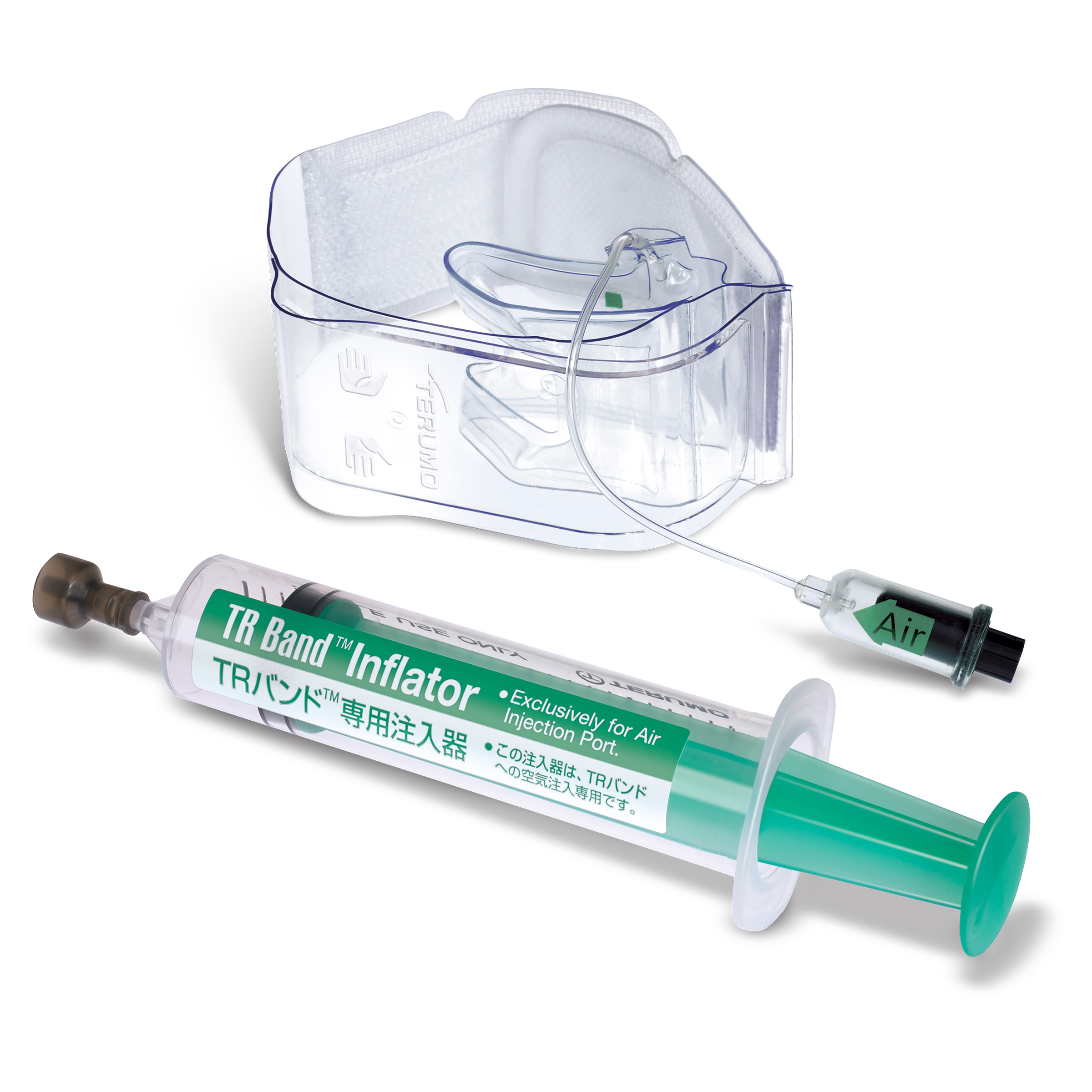
To obtain a physical copy of the TR Band Application and Removal Badge

Step-by-Step Instructions9
 1
1
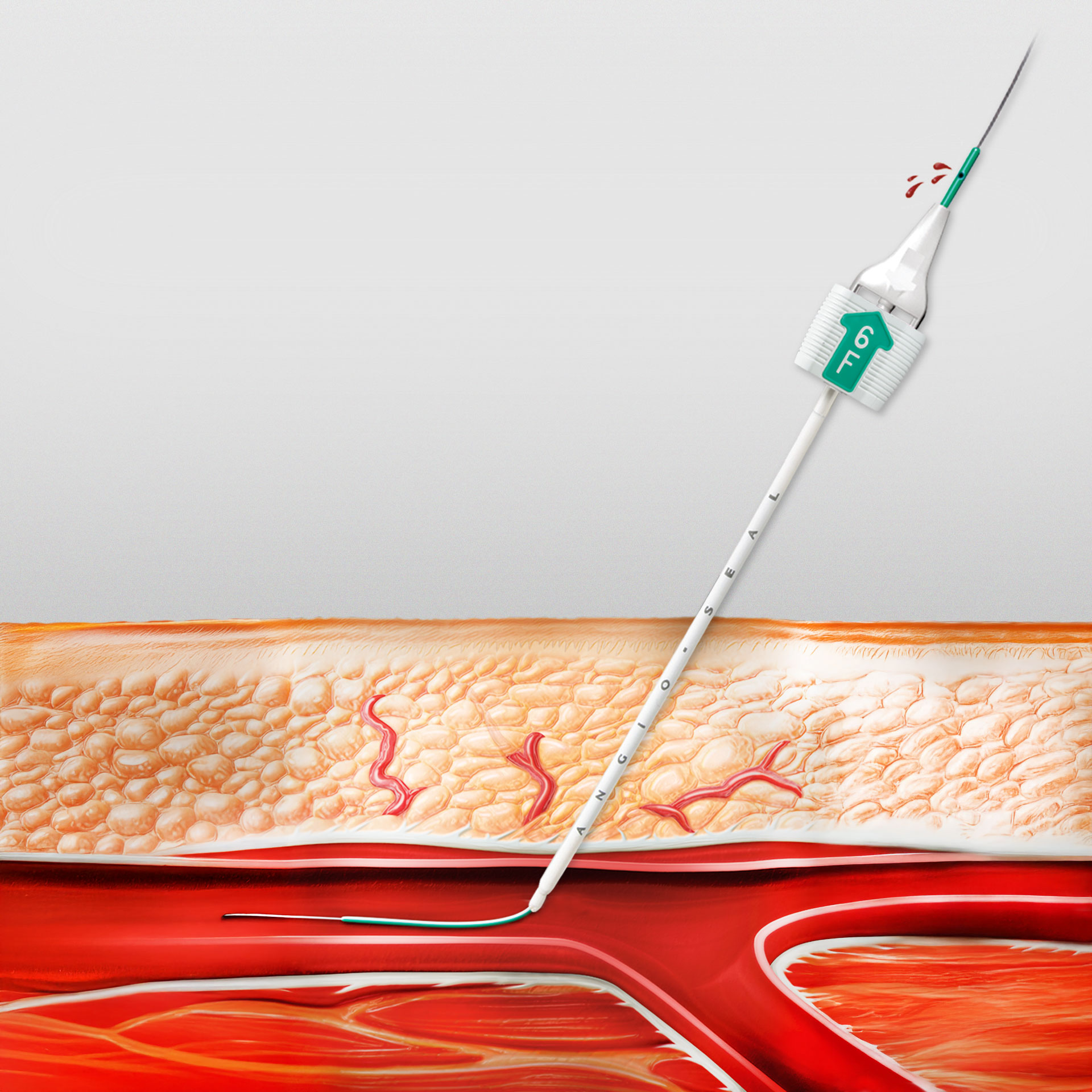
Locate the Artery
- Exchange the procedure sheath with the Angio-Seal locator system
- Blood flow through the locator visually confirms proper sheath position in the artery
 2
2
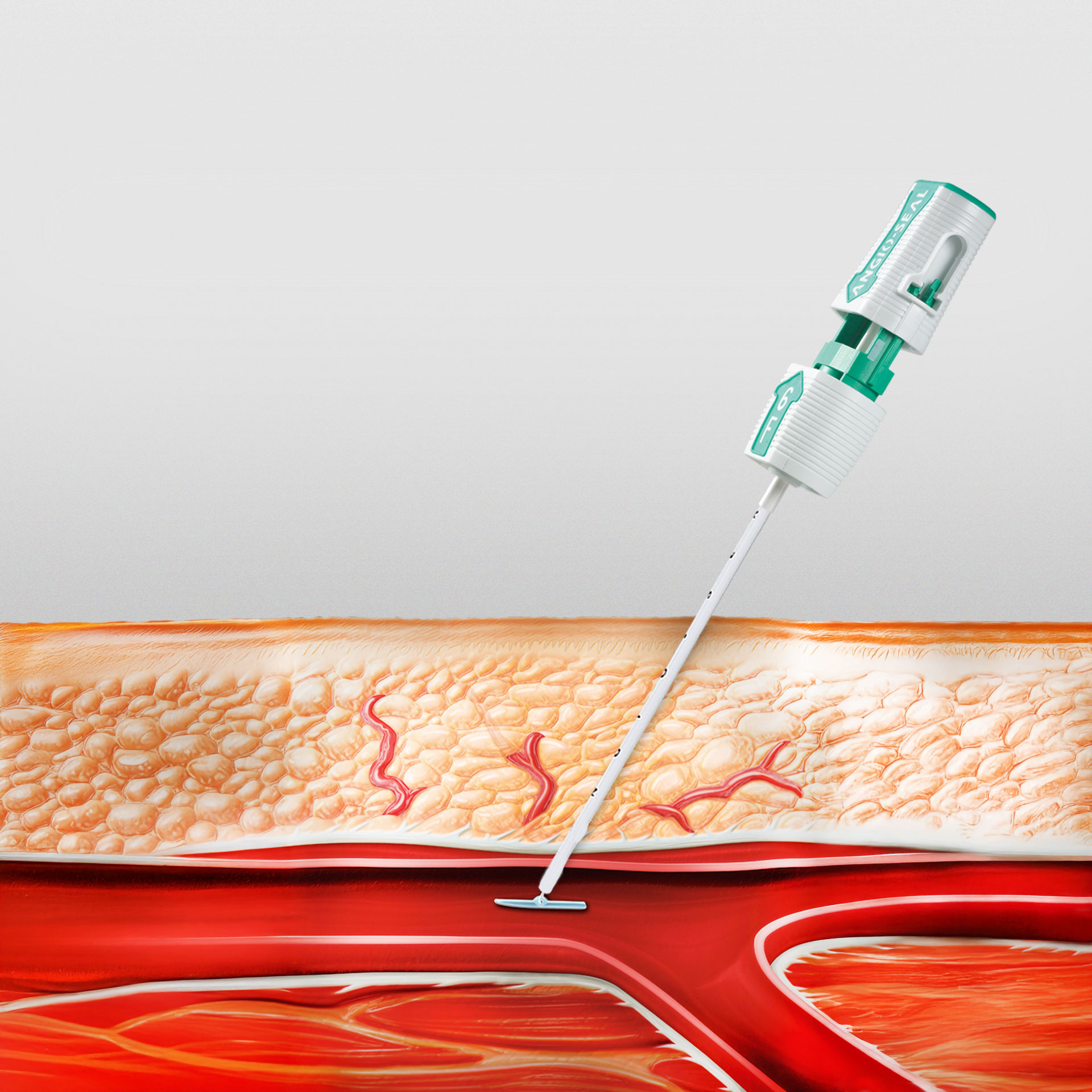
Set the Anchor
- Insert the Angio-Seal VIP device into the sheath. The sheath cap and device sleeve will snap together when properly fitted.
- Maintain grip on the insertion sheath and gently pull the device cap straight back until resistance is felt and both device sleeve bands are fully visible.
- The anchor is now locked in place and device is ready to be deployed.
 3
3
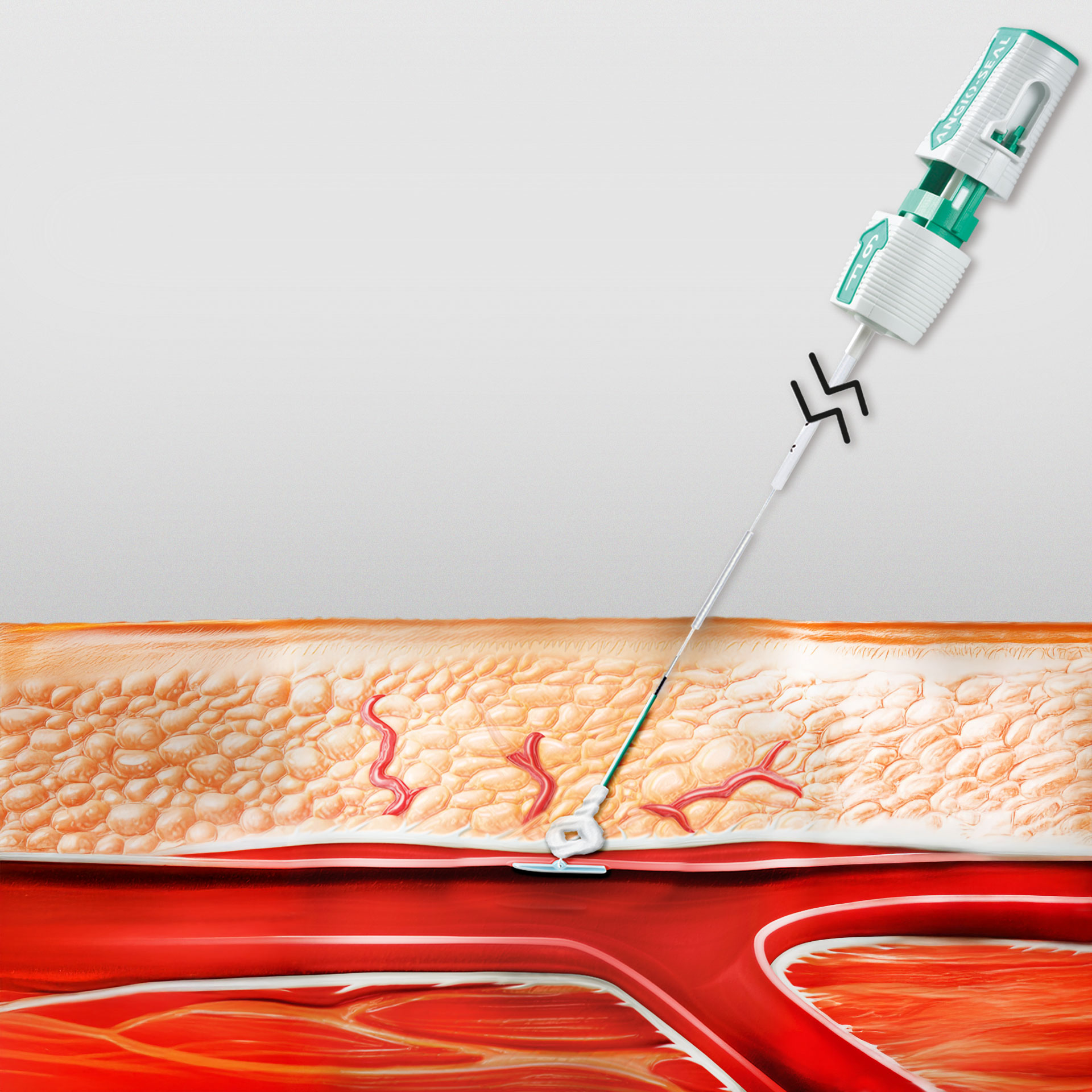
Seal the Puncture
- Gently pull back on the Angio-Seal VIP device, following the angle of the puncture tract until the suture has stopped spooling.
- Maintain tension on the suture and gently advance the compaction tube until resistance is felt.
- Cut the suture below the clear stop and remove the device. Gently pull up on remaining suture and cut suture below both the black compaction marker and skin level.
The following information are suggested guidelines, and should not be a substitute for physician’s orders.
Patients who have undergone diagnostic angiography and have received a 6Fr ANGIO-SEAL Vascular Closure Device can safely and effectively ambulate in less than 20 minutes and be discharged one hour post ambulation1.
Patients receiving ANGIO-SEAL Vascular Closure Device following an interventional procedure using a 6F procedural sheath can be ambulated in approximately 1 hour2.
For patients who have undergone an interventional procedure using sheaths greater than 6F, post-procedure ambulation is at the discretion of the physician.
Activity and Ambulation
- The head of the bed may be elevated 15–45 degrees to increase patient comfort3-6.
- Have patient support the puncture site when coughing, sneezing or straining.
- Patient may ambulate and be discharged per physician's orders.
Discharge Information
Review the patient care instructions with the patient. The following guidelines are recommended:
- Patients may feel a "pea size" lump and/or mild tenderness in the groin.
- Patients should avoid driving the day of discharge.
- Patients may take a shower.
- Patients should avoid baths, hot tub use or swimming until the puncture site is healed.
- For 48–72 hours, patients should refrain from lifting anything over ten pounds.
- Dressing change - the day after discharge, remove the dressing and gently clean the site with mild soap and water. Gently dry the site and cover with a bandage. Change dressing daily until the skin heals.
- Provide the ANGIO-SEAL Device Patient Guide and Information Card to the patient or family.
- Instruct the patient to carry the Patient Information Card for 90 days. After this time, the ANGIO-SEAL Vascular Closure Device components are absorbed7.
- Instruct patient to contact their physician who performed the procedure if the following symptoms occur:
- Fever
- Bleeding
- Wound drainage
- Rash
- Persistent tenderness in the groin or swelling
- Redness and/or warm to the touch
- Numbness or pain in the extremity when ambulating
This nursing care guide is for health care professionals caring for patients that have received the ANGIO-SEAL Vascular Closure Device following an angiographic or interventional procedure. Please follow hospital accepted protocols for patient care. This guide is not a substitute for physician orders.
Patient Assessment Post Procedure
- Check femoral puncture site. Visualize the site and palpate as required to assess for:
- Bleeding
- Bruising/Hematoma
- Swelling
- Assess presence and quality of distal pulses as compared to pre-procedure status. Use accepted hospital protocol for grading pulses.
- Inspect lower extremity for:
- Color
- Temperature
- Sensation
- Check vital signs per hospital protocol.
- Keep puncture site clean and dry.
If Bleeding Occurs
Please follow hospital accepted protocols for patient care.
This guide is not a substitute for physician orders.
Oozing - The procedure sheath has created a tissue tract to the artery and it may fill with blood and saturate the dressings.
Nursing Intervention
- Apply light manual pressure to the puncture site for approximately 2-3 minutes. Assess the source and intensity of bleeding along with the condition of the site (hematoma, bruising, etc.).
- Once hemostasis is assured, apply a sterile dressing using hospital accepted protocol.
Active Bleeding - This may present with pulsatile flow or enlarging hematoma.
Nursing Intervention
- Apply manual pressure using hospital accepted protocol.
- If head of bed is elevated, lower the head of the bed.
- Monitor vital signs.
- Once hemostasis is assured, apply a sterile dressing using hospital accepted protocol.
- Notify the physician of any change in the patient's status.
Built on Trust. Backed by Results. Hear From Your Peers.
Hear from our international physicians on how the ANGIO-SEAL VIP device performs across the globe.
Additional Resources
| Part Number | French Size | Guidewire Diameter (in) |
| 610130 | 6Fr | .035 Wire |
| 610131 | 8Fr | .038 Wire |
ANGIO-SEAL MRI Safety - Is ANGIO-SEAL MRI safe?
The implanted components of the device are MRI safe. The product is not made with natural rubber latex.9
Types of Vascular Closure Devices - What are some common types of vascular closure devices?
Percutaneous Closure Devices: These devices are inserted through a small incision in the skin and are guided to the puncture site to close the artery. They may use sutures, collagen plugs, or other mechanisms for closure.
Collagen Plugs or Sealants: Collagen-based plugs or sealants promote clot formation and provide a physical barrier to reduce bleeding, often used in combination with other closure methods.
Clip-Based Devices: These devices use clips or clamps to secure the arterial puncture site.
Vascular Compression Devices: These devices apply external pressure to the puncture site, aiding in hemostasis. They are commonly used alongside other closure devices.
Related Products
References
- Kussmaul WG 3rd, Buchbinder M, Whitlow PL, et al. Rapid arterial hemostasis and decreased access site complications after cardiac catheterization and angioplasty: results of a randomized trial of a novel hemostatic device. J Am Col Cardiol. 1995;25(7):1685-92. 2.
- Nash JE, Evans DG. The Angio-SealTM hemostatic puncture closure device. Concepts and experimental results. Herz. 1999;24(8):597-606.
- Applegate RJ, Turi Z, Sachdev N, et al. The Angio-Seal Evolution Registry: outcomes of a novel automated Angio-Seal vascular closure device. J Invasive Cardiol. 2010;22(9):420-6
- Aker UT, Kensey KR, Heuser RR, Sandza JG, Kussmaul WG 3rd. Immediate arterial hemostasis after cardiac catheterization: initial experience with a new puncture closure device. Catheter Cardiovasc Diagn. 1994;31(3):228-32.
- Applegate RJ, Rankin KM, Little WC, Kahl FR, Kutcher MA. Restick following initial Angioseal use. Catheter Cardiovasc Interv. 2003;58(2):181-184.
- Tellez A, Cheng Y, Yi GH, et al. In vivo intravascular ultrasound analysis of the absorption rate of the Angio-SealTM vascular closure device in the porcine femoral artery. EuroIntervention. 2010;5(6):731-6.
- Kapadia SR, et al. The 6Fr Angio-Seal arterial closure device: Results from a multimember prospective registry. Am J Cardiol. 2001; 87:789-791.
- Manolis AS, et al. Simplified swift and safe vascular device deployment without a local arteriogram: Single center experience in 2074 consecutive patients. Indian Heart Journal. 2016; 68:529-538.
- ANGIO-SEAL® VIP Instructions for Use. ASIN0018. 2025-10-07.
- StarClose SE IFU EL2101551 (10/2/14)
- MYNX Control Vascular Closure Device IFU 07/21
- MYNXGRIP Vascular Closure Device IFU 04/20
- VASCADE Vascular Closure System IFU 2611 Rev T, 11 AUG 2021
- Perclose ProStyle Suture-Mediated Closure and Repair System IFU EL2127594 (2020-11-03)
- CELT ACD Vascular Closure Device IFU-TS-004 Rev 4 (SCR 230)
- Data on file. Angio-Seal PMA 930038
Indications: The Angio-Seal Vascular Closure Device is indicated for use in closing and reducing time to hemostasis of the common femoral arterial puncture site in patients who have undergone diagnostic angiography procedures or interventional procedures using an 8 French or smaller procedural sheath for the 8 F Angio-Seal device and a 6 French or smaller procedural sheath for the 6 F Angio-Seal device. Angio-Seal is also indicated for use to allow patients who have undergone diagnostic angiography to safely ambulate as soon as possible after sheath removal and device placement, as well as to allow patients who have undergone an interventional procedure to safely ambulate after sheath removal and device placement.
Important Safety Information: Possible adverse events for vascular closure devices include, but are not limited to: bleeding or hematoma, AV fistula or pseudoaneurysm, infection, allergic reaction, foreign body reaction, inflammation or edema.
This device should only be used by a licensed physician (or other health care professional authorized by or under the direction of such physician) possessing adequate instruction in the use of the device, e.g., participation in an Angio-Seal physician instruction program or equivalent.
RX ONLY. Refer to the product labels and package insert for complete warnings, precautions, potential complications, and instructions for use.