

Maximum Target Artery Size
- Largest in class sizing to treat a larger patient anatomy¹

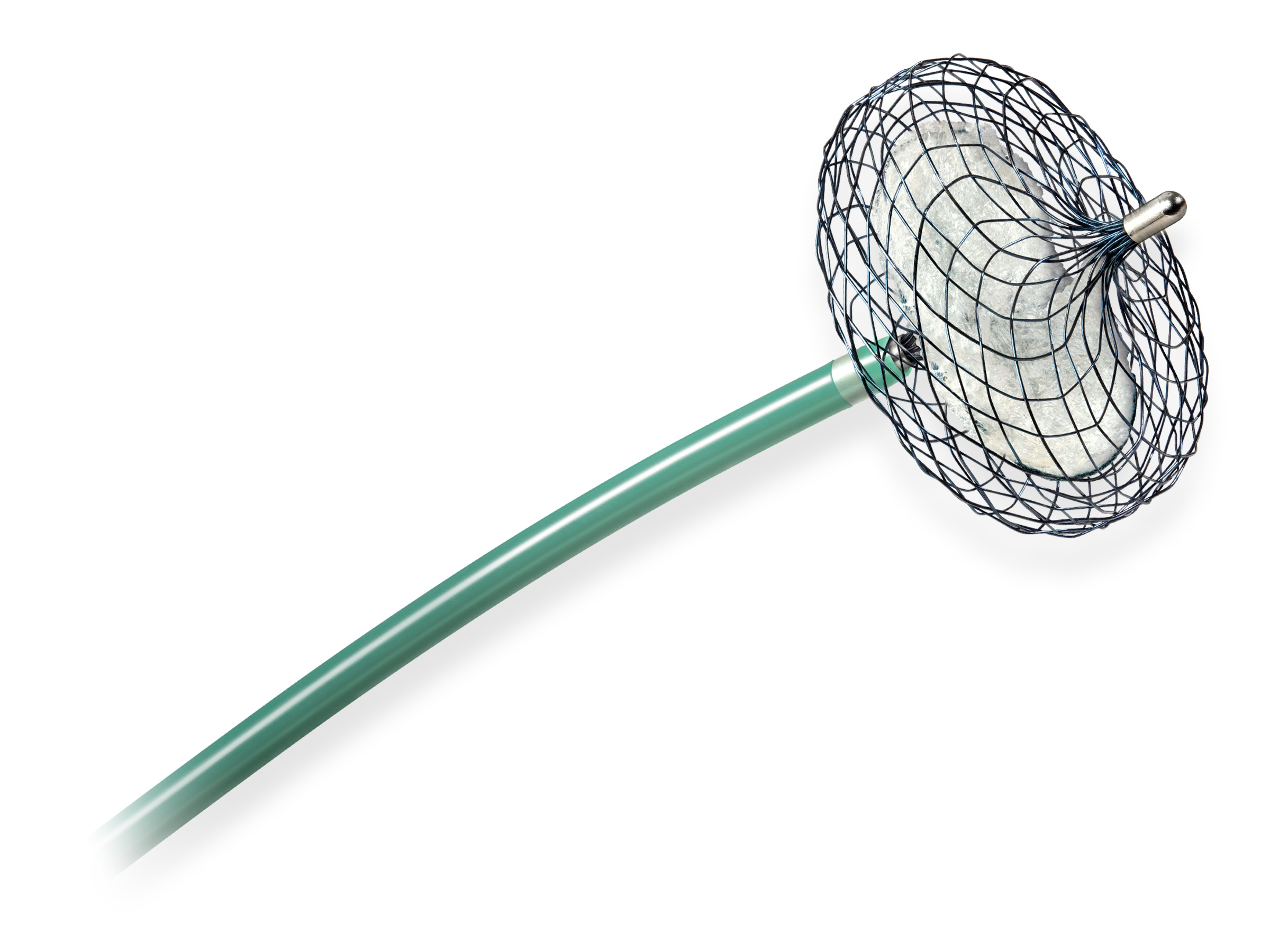
Designed to Help Achieve Plug Stability
- Braided outer structure designed for excellent conformability and vessel wall apposition¹

Designed to Work with PG Pro™ Peripheral Microcatheter
- Supports distal procedures and deployment with lengths up to 165 cm³
Precise, Stable Occlusion Is Within Your Reach
The AZUR™ Vascular Plug offers exceptional performance in a variety of applications, including splenic embolization procedures, partial splenic embolization, transarterial embolization, hepatic arterial embolization, transcatheter arterial embolization, and arterial embolization for bleeding.
Whether you are treating a pulmonary arterial venous malformation (PAVM), managing complications related to Hereditary Hemorrhagic Telangiectasia (HHT), or addressing other vascular issues, the precise design and effective occlusion capabilities of the AZUR™ Vascular Plug allows for controlled and targeted embolization to enhance patient outcomes.
Additional Resources
AZUR™ Vascular Plug
| PRODUCT CODE |
DESCRIPTION | OUTER DIAMETER (OD) | REFERENCE VESSEL SIZE |
REFERENCE IMPLANTED LENGTH |
| 45-180500 | AZUR Vascular Plug (Small) | 5 mm | 2.5 mm min | 13.5 mm |
| 4.5 mm max | 8.5 mm | |||
| 45-180800 | AZUR Vascular Plug (Medium) | 8 mm | 4.5 mm min | 16.0 mm |
| 6.5 mm max | 12.0 mm | |||
| 45-181000 | AZUR Vascular Plug (Large) | 10 mm | 6.5 mm min | 18.5 mm |
| 8 mm max | 15.0 mm |
PG Pro™ Peripheral Microcatheter
| PRODUCT CODE | DESCRIPTION | LENGTH | MAX PRESSURE | RO MARKERS |
| PGP28140STR | PG Pro Peripheral Microcatheter 2.8Fr, Straight | 140 cm | 1200 PSI | 2 (3cm, distal tip) |
| PGP28165STR | 165 cm |
GLIDEWIRE® GT Guidewire
| PRODUCT CODE | DESCRIPTION | DIAMETER | LENGTH | GRIND LENGTH | TIP SHAPE | RADIOPAQUE LENGTH |
| RG*ES1820SP | GLIDEWIRE GT 018” 200 cm Straight Shapeable |
0.018” | 200 cm | 25 cm | Straight - Shapeable | 2 cm |
| RG*GW1820SP | GLIDEWIRE GT 018” 200 cm Double Angle |
0.018” | 200 cm | 25 cm | Double Angle | 2 cm |
What is splenic embolization?
Splenic embolization is a minimally invasive procedure performed by interventional radiologists or surgeons to treat various conditions involving the spleen. During the procedure, tiny particles or coils are inserted into the blood vessels supplying the spleen, blocking or reducing blood flow to specific areas. This technique is used to manage spleen-related issues such as traumatic injuries, splenic artery aneurysms, or hypersplenism. By selectively blocking blood supply, splenic embolization can control bleeding, prevent rupture, or decrease spleen size while preserving its function. This procedure offers an alternative to surgical removal of the spleen and is associated with shorter hospital stays and faster recovery times.
What is arterial embolization?
Arterial embolization is a sophisticated technique employed by interventional radiologists or surgeons to treat various vascular conditions. It involves the insertion of tiny particles or embolic materials into the arterial blood vessels, blocking the flow of blood to specific target areas. This procedure is commonly used to manage conditions such as tumors, vascular malformations, aneurysms, or uncontrollable bleeding. By obstructing the blood supply, arterial embolization can effectively shrink or eliminate the abnormal vascular structures, control bleeding, or prevent further complications. This minimally invasive approach offers significant benefits compared to traditional surgery, including reduced risks, shorter hospital stays, and faster recovery times.
References
- Data on file
- AZUR Vascular Plug IFU 100074 Rev. D 2023
- PG Pro Peripheral Microcatheter IFU 100063 Rev. D Revised 2023-10