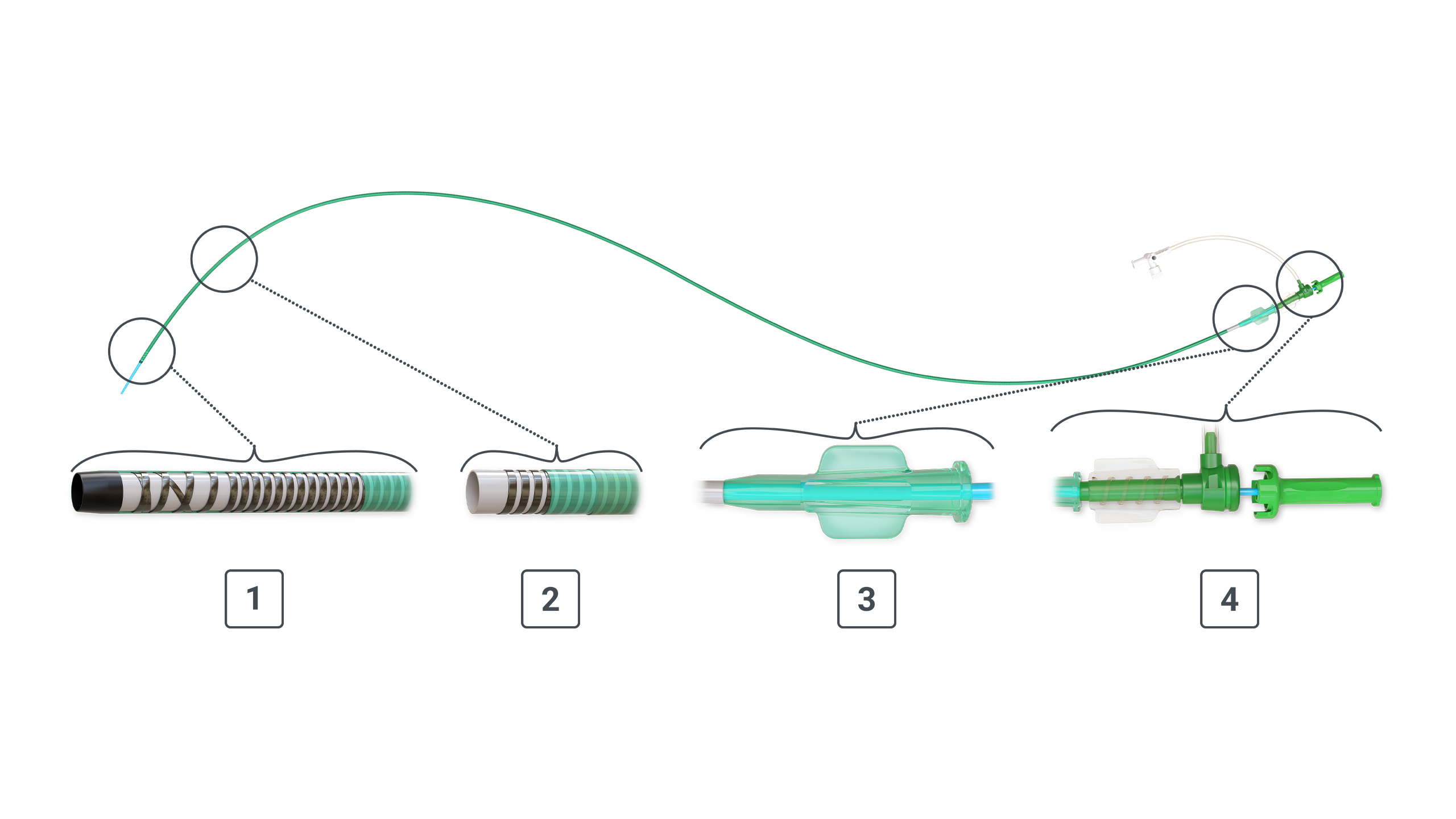
ACCESS
R2P® DESTINATION SLENDER® Guiding Sheath
Enhance your radial access algorithm with the performance of a thin-wall guiding sheath designed for smooth transition1
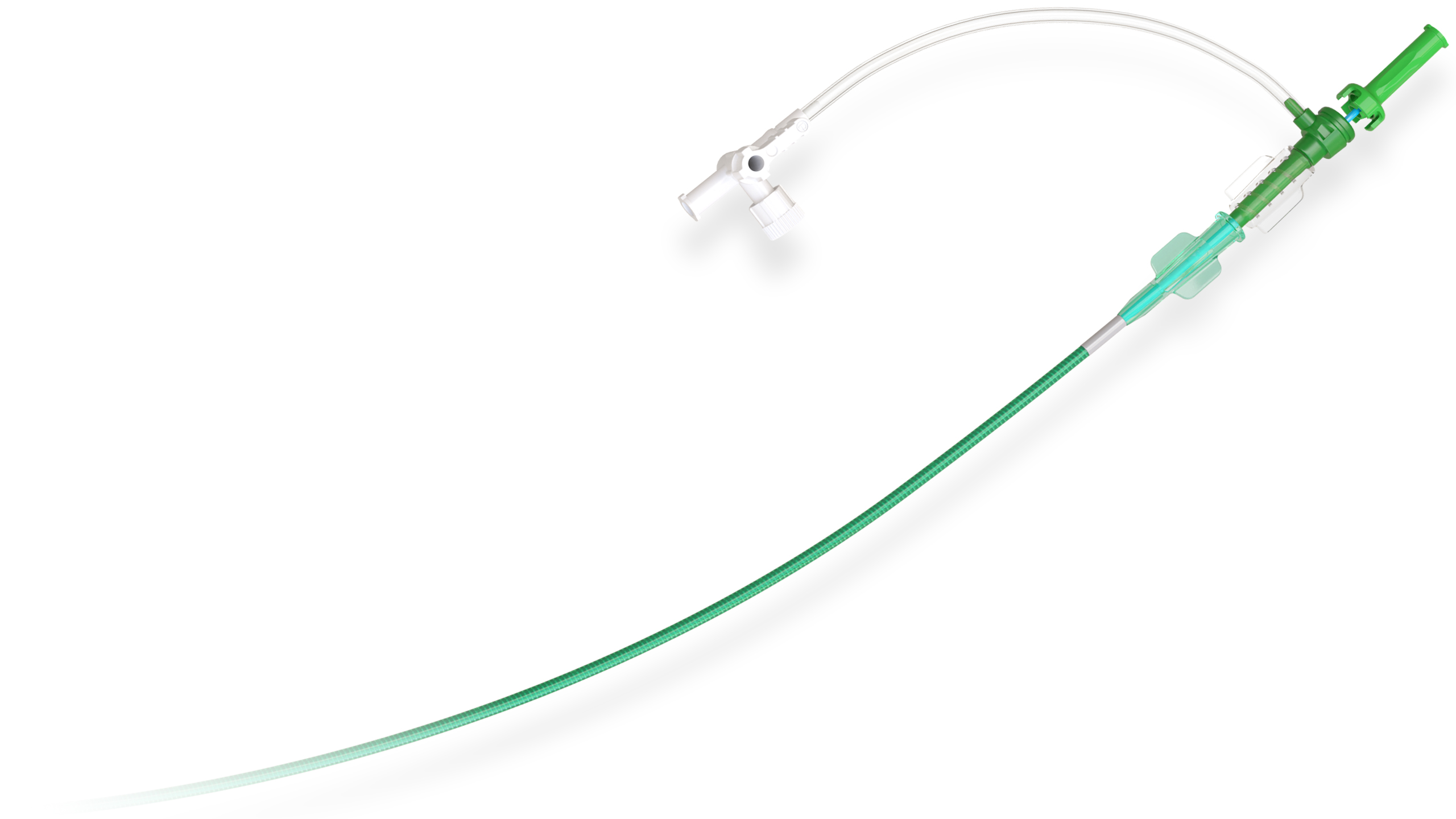
ACCESS
Enhance your radial access algorithm with the performance of a thin-wall guiding sheath designed for smooth transition1


| Product Code | Working Length | Total Length | FR size | Tip Shape | Sheath ID | Sheath OD | Dead Space Volume | Max guidewire OD |
| GS-R6ST1C75W | 75 cm | 80 cm | 6 Fr | Straight | 2.2 mm / 0.087" | 2.5 mm / 0.100" | 4.0 mL | 0.038" (0.97 mm) max |
| GS-R6ST1C85W | 85 cm | 90 cm | 6 Fr | Straight | 2.2 mm / 0.087" | 2.5 mm / 0.100" | 4.5 mL | 0.038" (0.97 mm) max |
| GS-R6ST1C95W | 95 cm | 100 cm | 6 Fr | Straight | 2.2 mm / 0.087" | 2.5 mm / 0.100" | 5.0 mL | 0.038" (0.97 mm) max |
| GS-R6ST1C10W | 105 cm | 110 cm | 6 Fr | Straight | 2.2 mm / 0.087" | 2.5 mm / 0.100" | 5.5 mL | 0.038" (0.97 mm) max |
| GS-R6ST1C12W | 119 cm | 124 cm | 6 Fr | Straight | 2.2 mm / 0.087" | 2.5 mm / 0.100" | 6.0 mL | 0.038" (0.97 mm) max |
| GS-R6ST1C15W | 149 cm | 154 cm | 6 Fr | Straight | 2.2 mm / 0.087" | 2.5 mm / 0.100" | 7.0 mL | 0.038" (0.97 mm) max |
Why is a thin-wall guiding sheath important for R2P cases?
A thin-wall guiding sheath is crucial for R2P (radial to peripheral) cases because it enables the delivery of devices through smaller access points while maintaining a large inner lumen. This design allows physicians to use a destination sheath or guiding sheath that supports complex interventions without needing larger arterial access, which reduces the risk of complications. In radial access procedures extending to peripheral targets, a thin-wall guiding sheath optimizes patient comfort and reduces the potential for spasm. It also permits the passage of a guiding catheter with sufficient support and torque response, enhancing precision during challenging radial to peripheral interventions.
RX ONLY. Refer to the product labels and package insert for complete warnings, precautions, potential complications, and instructions for use.
1. Data on file
a. The R2P™ DESTINATION SLENDER™ Guiding Sheath is not intended for discrete placement within the coronary or neuro vasculature