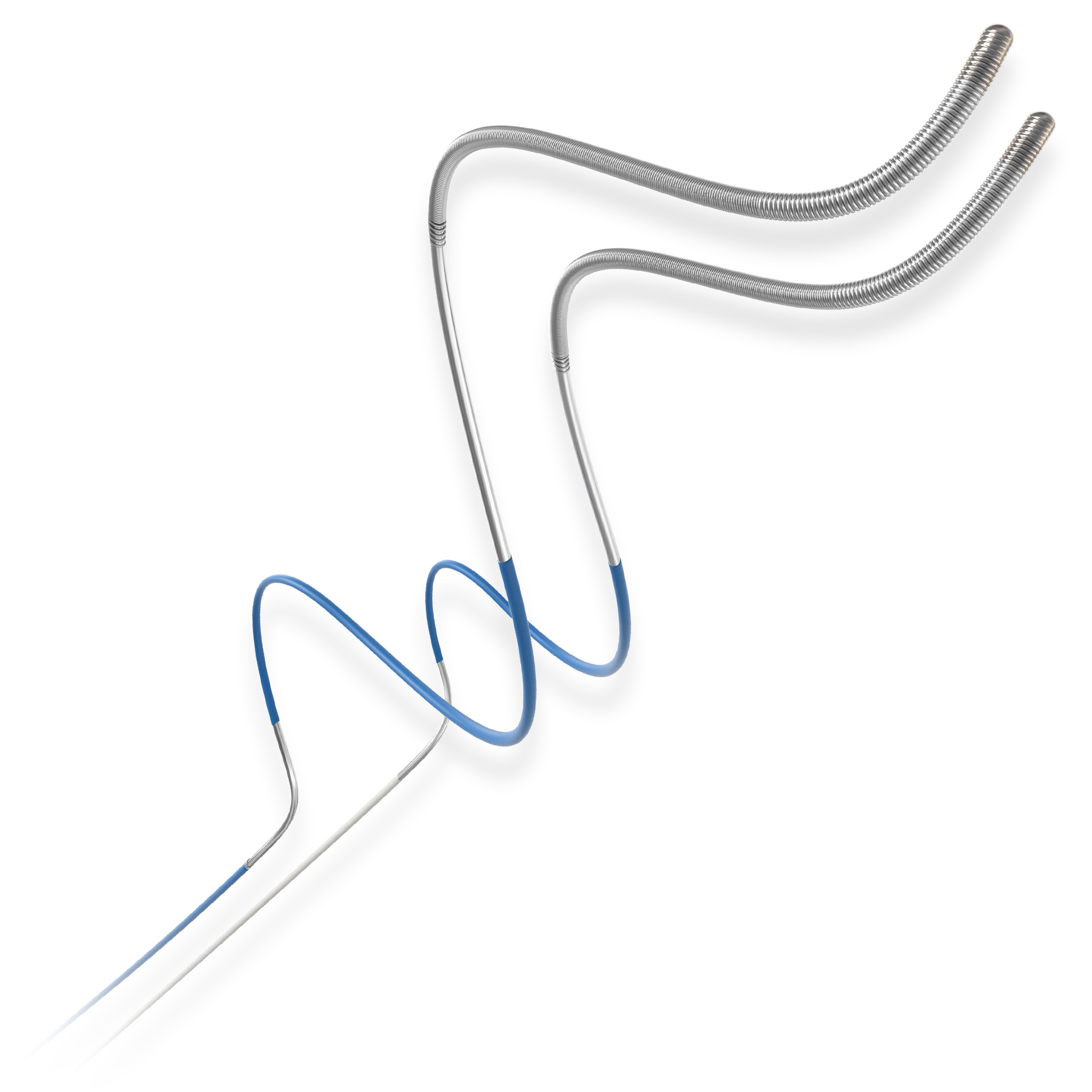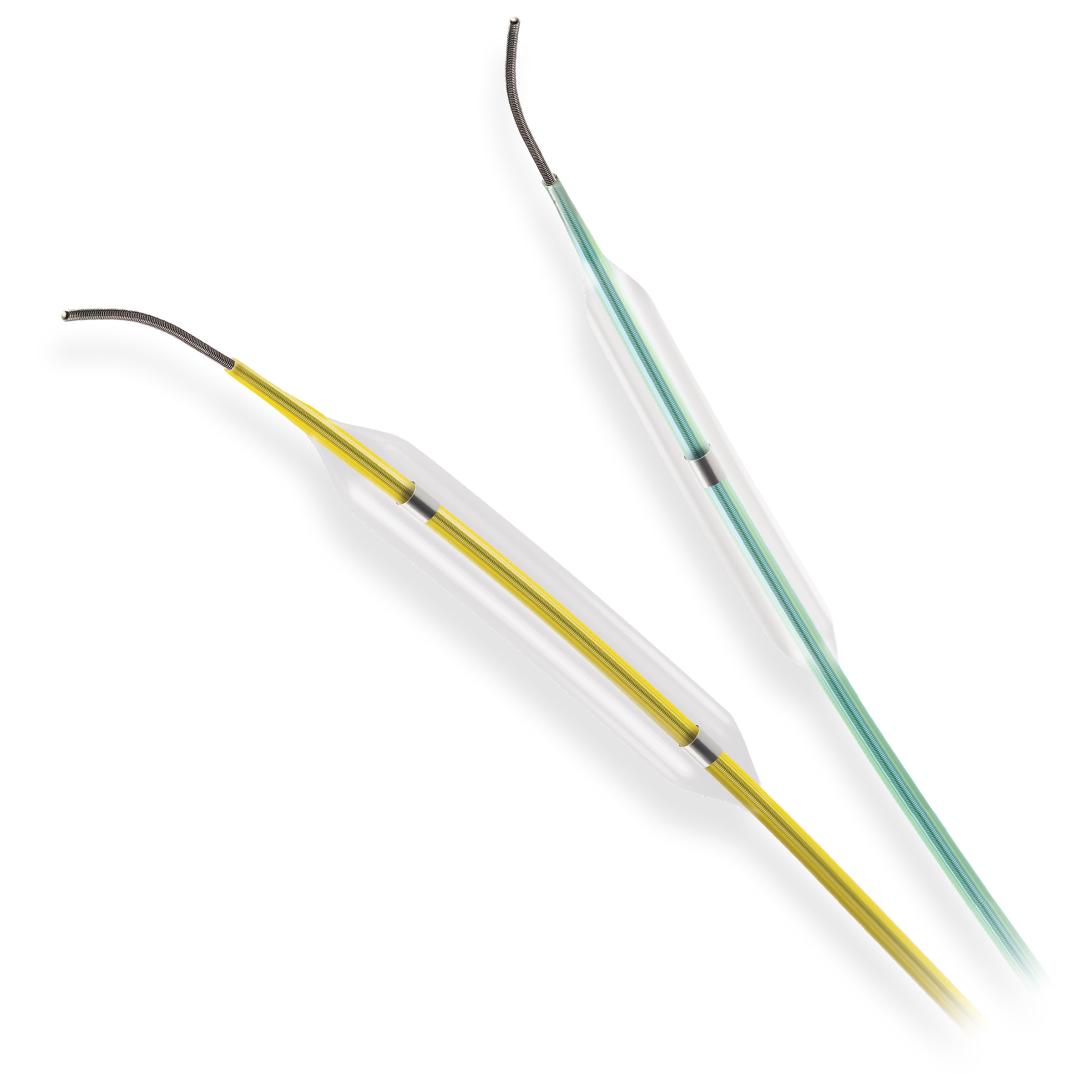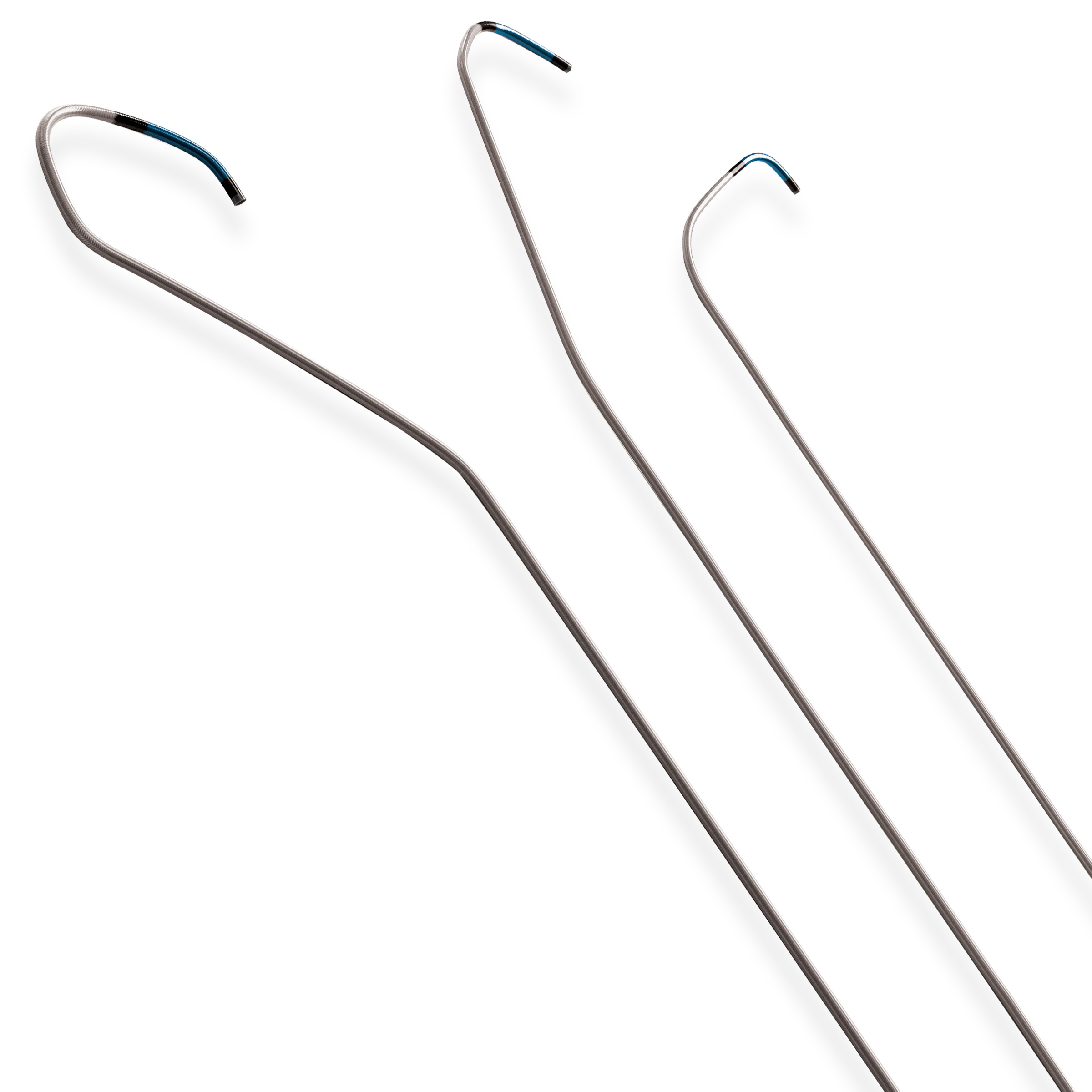
CATHETERS
FINECROSS® M3 Coronary Micro-Guide Catheter
Designed to provide a balanced combination of key properties, optimizing guidewire support and crossability for navigating simple to complex lesions.1
CATHETERS
Designed to provide a balanced combination of key properties, optimizing guidewire support and crossability for navigating simple to complex lesions.1

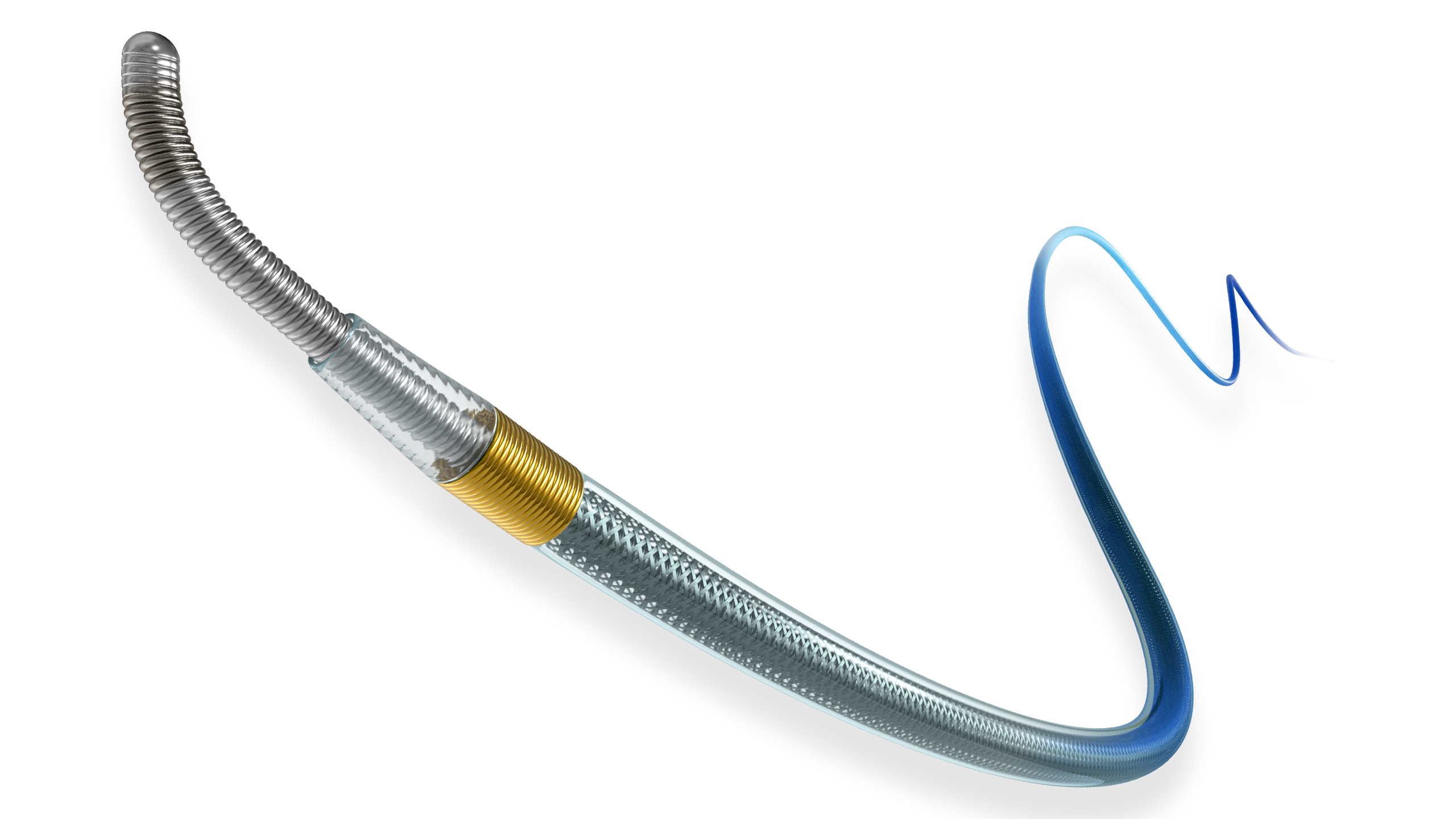
FINECROSS M3 stainless steel braid construction is designed to provide strength, responsiveness and support for improved pushability to access and cross complex lesions.

The distal 15cm is ultra-flexible for improved trackability around tight bends and tortuous anatomy. The floppy distal segment is designed to be atraumatic and provide an optimal balance between trackability and safety while navigating through the tortuous anatomy.1

The outer diameter of the stainless-steel shaft tapers from a proximal 2.5Fr. to a distal 1.7Fr. designed for improved crossability and guidewire handling.1
| Product Code | Catheter Length | Distal Hydrophilic Coating | Distal Tip Outer Diameter | Proximal Outer Diameter | Distal Inner Diameter | Proximal Inner Diameter |
Recommended Guidewire Size |
| M3-1430 | 130cm | 75cm | 1.7Fr. (0.56mm) | 2.5 Fr. (0.84mm) | 0.018" (0.45mm) | 0.021" (0.55mm) | 0.014" (0.36mm) |
| M3-1450 | 150cm | 95cm | 1.7Fr. (0.56mm) | 2.5 Fr. (0.84mm) | 0.018" (0.45mm) | 0.021" (0.55mm) | 0.014" (0.36mm) |
How best to use a coronary microcatheter?
A coronary microcatheter is used to enhance guidewire support, enable wire exchange, and improve crossing in challenging coronary anatomy. After advancing the guide catheter, insert a 0.014" guidewire and position it near the lesion. The microcatheter is then advanced over the wire under fluoroscopy, ensuring the wire always leads the device to avoid vessel injury. Maintain gentle, controlled manipulation, avoiding excessive rotation if resistance occurs.
The Terumo Finecross M3 microcatheter provides tapered stainless‑steel braid construction for support and pushability, with a 15cm floppy distal segment for trackability in tortuous segments. Its tapered outer diameter (2.5Fr proximal to 1.7Fr distal) enhances crossability and facilitates guidewire handling during complex PCI.1
Once positioned, the microcatheter allows wire exchange by stabilizing the system while the original wire is withdrawn and replaced. It can also facilitate contrast injection for vessel visualization when required. After completing wire manipulation or lesion crossing, withdraw the microcatheter carefully, maintaining wire position.